2026 Technical Conference: Spotlight on Emerging Contaminants, PFAS, and Microplastics
Focus on Emerging Pollutants: Spotlight on PFAS and Microplastics at the 2026 Technical Days
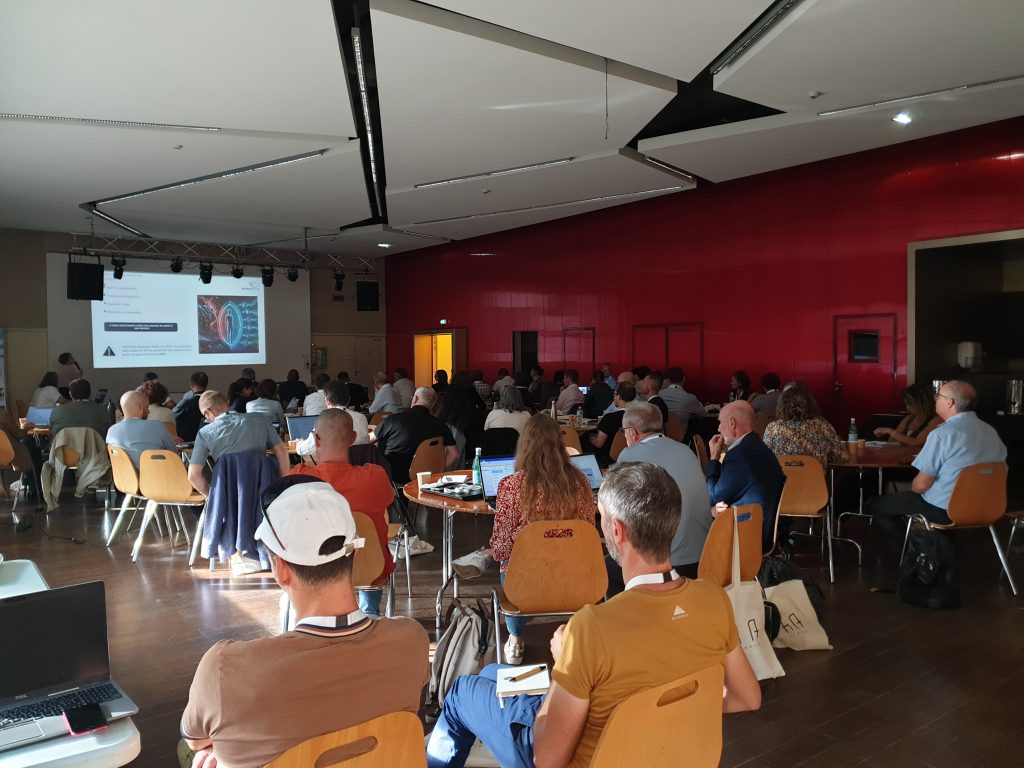
On September 24 and 25, 2026, the Technical Days organized by TERA Environnement in Crolles brought together experts, researchers, industry representatives, and environmental stakeholders to address a common challenge: better understanding, measuring, and managing emerging pollutants, with a particular focus on PFAS (perfluoroalkyl and polyfluoroalkyl substances) and microplastics.
The presentations covered the entire spectrum, from understanding contamination and its health and environmental impacts to treatment solutions, including metrology and regulatory developments.
A warm thank you to all participants and speakers for their involvement, contributions and open exchange throughout the event.
PFAS, microplastics, metrology, regulations, environmental impacts, and treatment solutions: a look back at the main topics covered over these two days.
Microplastics: Sampling, Analysis, and Environmental Contamination
Coastal landfills, in particular, have raised concerns about environmental contamination from microplastics. Several of these sites are currently being monitored. During these events, feedback from fieldwork provided an opportunity to address the challenges associated with sampling and analyzing microplastics at these sites.
Characterizing microplastics remains complex due to the wide variety of particles and analytical methods. Sample quality is also a major challenge, as the risk of sample contamination is particularly high. Harmonizing sampling and analysis practices is therefore essential to obtaining reliable and comparable results.
PFAS: Regulation, Metrology, and Environmental Monitoring
PFAS management is evolving rapidly in France and Europe, with a gradual strengthening of environmental monitoring and measurement methods.
The presentations focused in particular on the work being conducted to better understand PFAS concentrations in soil, ambient air, and atmospheric deposition.
Measuring PFAS in the air remains a significant challenge, particularly due to the lack of harmonization among methods and the need to account for both the gas and particulate phases. Standardization efforts and several research programs are therefore underway to improve sampling and analytical methods, as well as to better understand the transport and dispersion of PFAS in the environment.
Emerging Pollutants, Air Quality, and Health and Environmental Impacts
Emerging pollutants raise new challenges when it comes to assessing their impacts on health and the environment. PFAS, microplastics, and other contaminants can move between different environments and affect ecosystems, underscoring the need to adapt monitoring approaches.
In the field of air quality, new indicators are also being studied to better characterize the impact of particulate matter beyond just their PM10 or PM2.5 concentrations. In particular, the oxidative potential of particulate matter—which provides insight into its ability to induce oxidative stress—is now being incorporated into European regulations, although the methods still need to be harmonized.
Finally, assessing the risks associated with emerging pollutants remains complex: health and regulatory thresholds depend not only on the substances in question but also on exposure scenarios and routes. They must also take into account the available scientific knowledge and the technical capabilities for measurement and treatment.
Treatment of PFAS in Water and Soil: What Are the Solutions?
The high stability of PFAS makes their treatment particularly complex. For contaminated soils, innovative degradation processes—notably catalytic thermal treatment—are currently being developed, with promising results and the prospect of moving to the pilot scale.
For contaminated water, various strategies can be considered to separate or concentrate PFAS prior to their disposal or destruction, including adsorption, membrane filtration, and foam fractionation. Foam fractionation, in particular, is the focus of research aimed at developing an effective solution while minimizing energy consumption and the volume of waste generated. These advances illustrate the diversity of solutions being explored to address the complex challenge of treating PFAS in water and soil.
These two days highlighted the challenges associated with measuring emerging pollutants—from the quality of sampling to the reliability of analyses—as well as the importance of sharing experiences to advance best practices.
PFAS and Microplastics: From Understanding Pollutants to Analyzing Them
TERA Environnement assists you with PFAS measurements in the air—through monitoring of atmospheric deposition and measurements using air samplers— as well as in aqueous solutions derived from surface extractions.
In addition, the ToxiLabo laboratory can analyze PFAS in workplace air and at emission sources.
We also offer measurements of microplastics in atmospheric deposition, soil, and water.
For more information, please contact the sales team directly: